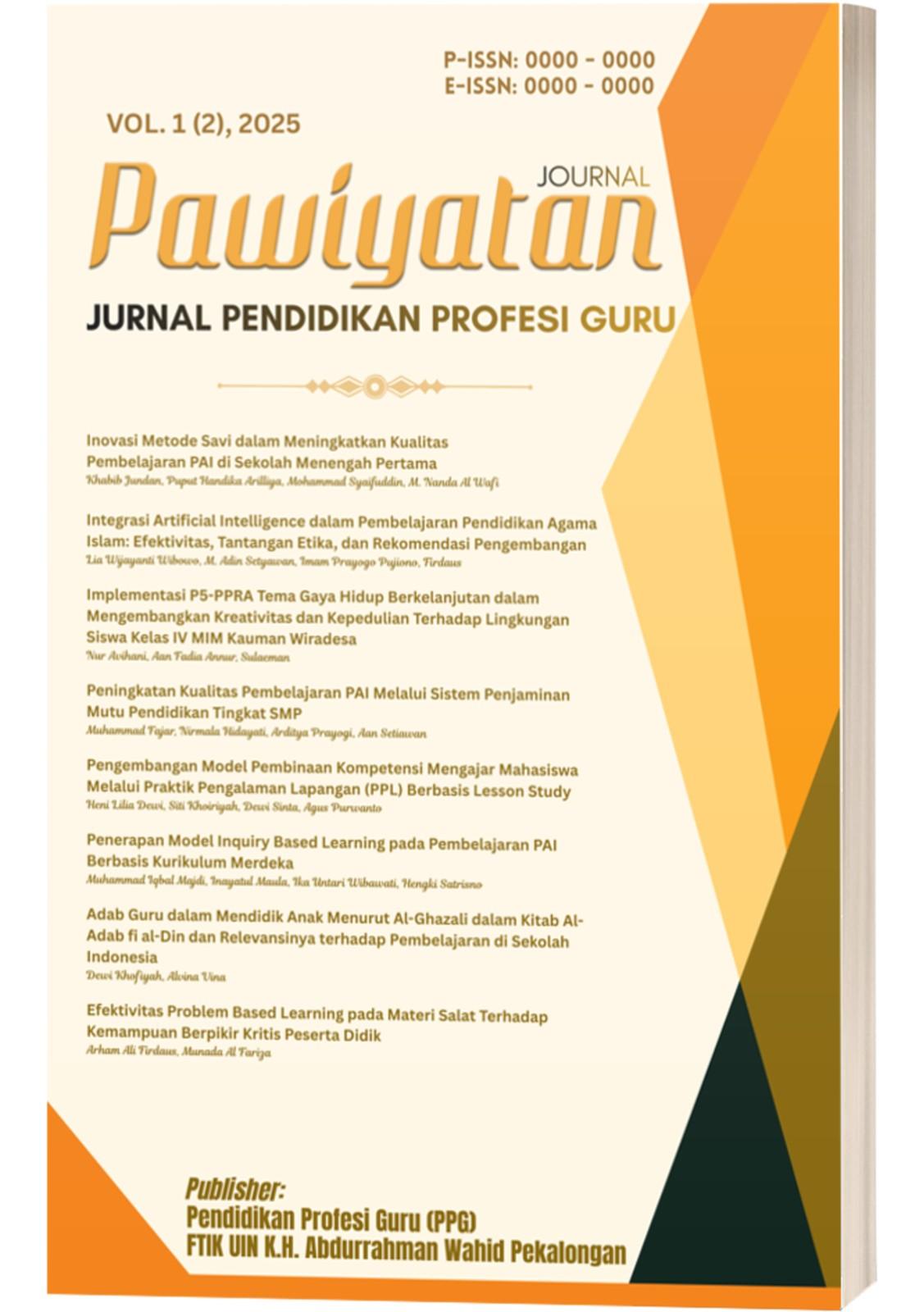
Penerapan Model Inquiry Based Learning pada Pembelajaran PAI Berbasis Kurikulum Merdeka
DOI:
https://doi.org/10.28918/jv5hrb40Abstract
This research is motivated by the importance of selecting an appropriate learning model for each subject, particularly in Islamic Religious Education (PAI). In the learning process, teachers still tend to be the central focus while students simply listen. The researcher became interested in the learning approach used at SMP Negeri 1 Buaran, which implements the inquiry-based learning model. This is further supported by activities such as observing pictures and group discussions that align with the principles of inquiry-based learning. The purpose of this research is to describe the implementation and identify the supporting and inhibiting factors of the inquiry-based learning model in PAI instruction based on the Merdeka curriculum for Grade VII at SMP Negeri 1 Buaran, Pekalongan Regency. This type of research is field research using a descriptive qualitative approach. Data collection techniques include observation, interviews, and documentation. The data analysis technique uses non-statistical analysis. The results of this study show that the implementation of the inquiry-based learning model in PAI instruction based on the Merdeka curriculum for Grade VII at SMP Negeri 1 Buaran, Pekalongan Regency, consists of three stages: planning, implementation, and evaluation. In the implementation stage, there are four steps: formulating questions or problems, proposing hypotheses or preliminary answers, testing the hypotheses, and drawing conclusions. The supporting factors in implementing the inquiry-based learning model in Islamic Religious Education include internal factors such as the activeness and enthusiasm of the students, and external factors such as the existing curriculum and adequate facilities and infrastructure. The inhibiting factors include internal issues, such as 10% of students being less active and less motivated, and external challenges, such as insufficient allocated time.
Keywords:
References
Ananda, Rusydi. 2019. Perencanaan Pembelajaran. Medan. LPPI.
Azizah, Nurul Nur. 2022. Pengantar Pendidikan. Bandung. CV. Media Sains Indonesia.
Emzir. 2019. Metodelogi Penelitian Bidang Sosial. Yogyakarta: Gajah Mada Universitas Press Jogjakarta.
Farida Dan Saliyo. 2018. Teknik Bimbingan Konseling Islam. Kudus : Sekolah Tinggi Agama Islam Negeri Kudus.
Gemilang, Galang Surya. 2016. “Metode Penelitian Kualitatif dalam Bimbingan dan Konseling”. Kediri : Jurnal Fokus Konseling.Vol. 2. No.2.
Gunawan, Imam. 2022. Metode Penelitian Kualitatif Teori dan Praktik. Jakarta : PT Bumi Aksara. 2022.
Kholilah, Lilah. 2019. Pengaruh Penggunan Model Pembelajaran Inquiry pada Mata Pelaja Pendidikan Agama Islam Terhadap Keterampilan Berpikir dan Kemandirian Belajar Peserta Didik kelas VII SMPN Unggulan
Luluk Sri Agus Prasetyoningsih, dkk. 2021. Keterampilan Berbicara Tinjauan Deskriptif dan Penerapannya dalam Pembelajaran Bahasa Indonesia, Malang: Literasi Nusantara.
Mamik. 2019. Metodologi Kualitatif. Sidoarjo. Zifatama Jawara.
Moh. Slamet Untung. 2019. Metode Penelitian : Teori Dan Praktik Riset Pendidikan dan Sosial, Yogyakarta : Litera.
Mohammad Syaifuddin, & Ahmad Taufiq. (2020). Strategi Mindset System Belajar Kritis Komprehensif. La-Tahzan: Jurnal Pendidikan Islam, 12(1), 94–113. https://doi.org/10.62490/latahzan.v12i1.87
Mulyasa E. 2005. Menjadi Guru Professional: Menciptakan Pembelajaran Kreatif dan Menyenangkan. Bandung. PT Remaja Rosdakarya.
Nurul Nur Azizah. 2022. Pengantar Pendidikan, Bandung: CV. Media Sains Indonesia, 2022.
Prasetyoningsih, Luluk Sri Agus. 2021. Keterampilan Berbicara Tinjauan Deskriptif dan Penerapannya dalam Pembelajaran Bahasa Indonesia. Malang. Literasi Nusantara.
Suardi, Mohammad. 2018. Belajar dan Pembelajaran. yogyakarta. Deepublish.
Utomo, Wahyu Budi. 2020. Aplikasi Pembelajaran PAI (Pendidikan Agama Islam) Metode IBL (Inquiry Based Learning) Berbasis Zone Activity di Sekolah Dasar Lebah Putih Salatiga. Jurnal Study Islam. Vol. 21, No. 1.
Downloads
Published
Article Statistics
Issue
Section
License
Copyright (c) 2025 Edugrowth: Jurnal Pendidikan Profesi Guru

This work is licensed under a Creative Commons Attribution-ShareAlike 4.0 International License.