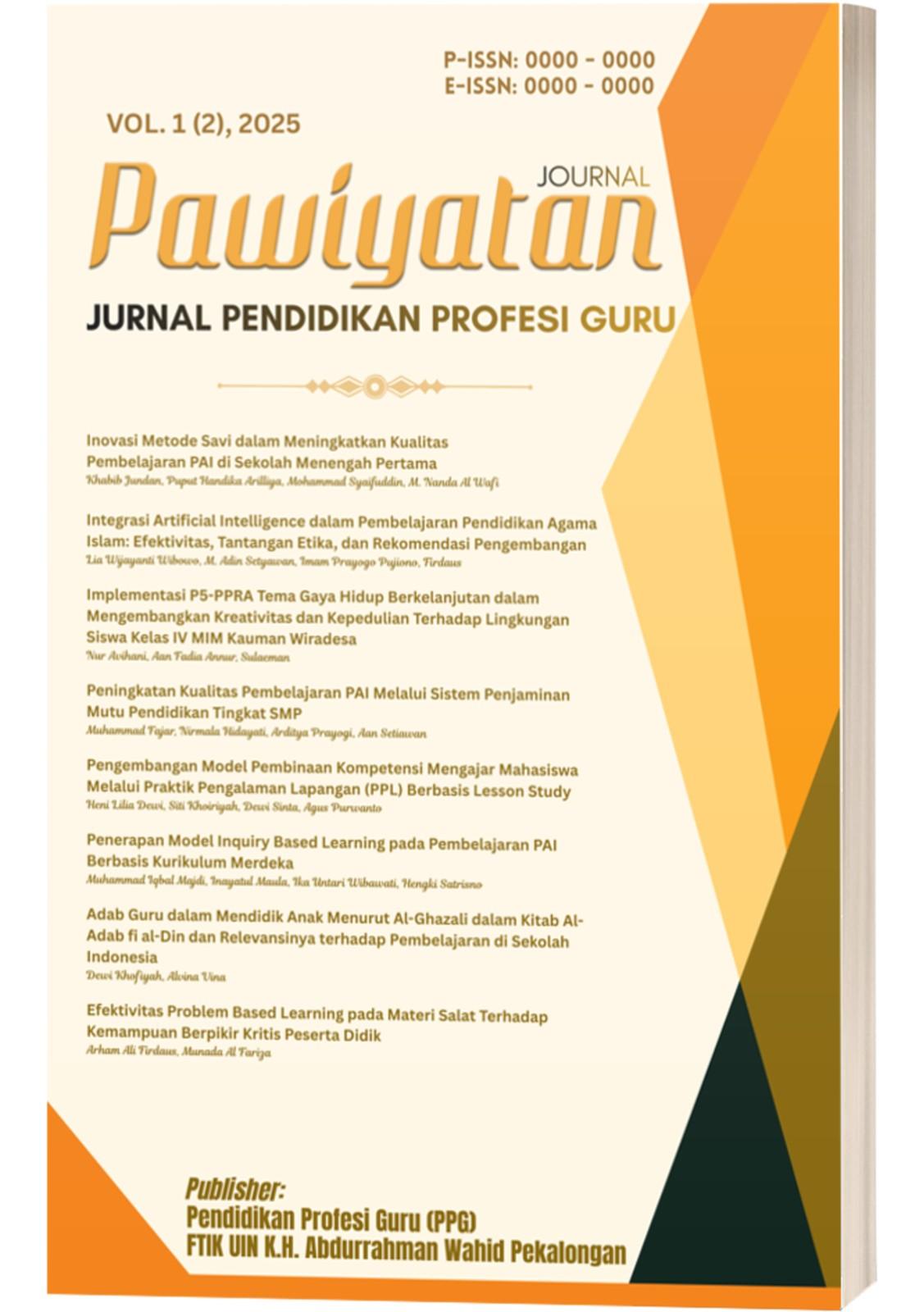
Pengembangan Model Pembinaan Kompetensi Mengajar Mahasiswa Melalui Praktik Pengalaman Lapangan (PPL) Berbasis Lesson Study
DOI:
https://doi.org/10.28918/3k2qew63Abstract
There are four teaching competencies that a teacher must possess based on Government Regulation (PP) Number 19 of 2005 concerning National Education Standards. These competencies cannot be easily acquired by prospective teachers. They require consistent learning efforts, practice, and interest as well as teaching potential. This study aims to determine the application of the lesson study model to improve the pedagogical competence of student interns and the extent of improvement in the pedagogical competence of student interns after the implementation of the lesson study model. The method used in this study is Supervisory Action through two cycles. Data collection techniques used were interviews, observation, and documentation studies. Data analysis in this study used quantitative descriptive analysis techniques, where data can be obtained from the results of observations, field notes, and documentation. Then the data is presented by describing the results and presented in the form of tables and diagrams. The results of the study above indicate that the lesson study model can improve the pedagogical competence of student interns towards a better direction if implemented continuously.
Keywords:
References
Hake R, Richard (1999). Analizing Change/Gain Score. American Educational Research Association’s Division Measurement and Research Methodology. Diakses dari http://Lists.Asu.Edu/Egi-Bin pada tanggal 5 Januari 2014 jam 09.30 WIB.
Hismanoglu, Murat dan Hismanoglu, Sibel (2010). English Language Teachers’ Perceptions Of Educational Supervision In Relation To Thair Professional Development : A Case Study Of Northern Cyprus. Novitas-Royal.
Kementrian Pendidikan Dan Kebudayaan, Badan Pengembangan Sumber Daya Manusia Pendidikan Dan Kebudayaan Dan Penjaminan Mutu Pendidikan, Pusat Pengembangan Profesi Pendidik (2012). Pembinaan Dan Pengembangan Profesi Guru Buku 2, Pedoman Pelaksanaan Penilaian Kerja Guru. Jakarta.
Mulyatun. 2014. Analisis Keterampilan Dasar Mengajar Mahasiswa Calon Guru Kimia (studi pada praktik Pengalaman Lapangan Mahasiswa Tadris Kimia). Jurnal PHENOMENHON 1(4): 79-90.
Ngalim, P (2008). Prinsip-prinsip dan tehnik Evaluasi Pengajaran. Bandung. PT Remaja Rosdakarya.
Nuryatno, Agus (2008). Mazhab Pendidikan Kritis (Menyikapi Relasi Pengetahuan Politik dan Kekuasaan). Yogyakarta : Resist Book.
Peraturan Menteri Negara Pendayagunaan Aparatur Negara Dan Reformasi Birokrasi, Nomor 21 Tahun 2010 tentang Beban Jabatan Fungsional Pengawas Sekolah Dan Angka Kreditnya.
Peraturan Menteri Pendidikan Nasional Republik Indonesia Nomor 16 Tahun 2007 Tentang Standar Kualifikasi Akademik dan Kompetensi Guru
Peraturan Menteri Pendidikan Nasional Republik Indonesia Nomor 39 Tahun 2009 tentang Beban Kerja Guru dan Pengawas Satuan Pendidikan.
Pradipta, A. W. dan Herminarto, S. 2015. Implementasi PBL Untuk Meningkatkan Motivasi, Kreativitas dan Pemahaman Konsep. Jurnal Inovasi Teknologi Pendidikan 1(2): 32-48.
Prihatiningsih, T (2010). Pandunan Supervisi Pengajaran Model School Based Lesson Study. Unnes. Semarang.
Sarimaya, F (2008). Sertifikasi guru apa, mengapa, dan bagaimana?. Bandung: Irama Widya.
Sudjana, N (2010). Menyusun Karya Tulis Ilmiah Berbasis Penelitian Tindakan. Bekasi: Binamitra Publishing.
Sudjana, N (2011). Supervisi Pendidikan (Konsep dan Aplikasi Bagi Pengawas Sekolah). Bekasi: Binamitra Publishing.
Undang-Undang Republik Indonesia, Nomor 14 tahun 2005 tentang Guru dan Dosen.
Downloads
Published
Article Statistics
Issue
Section
License
Copyright (c) 2025 Pawiyatan: Jurnal Pendidikan Profesi Guru

This work is licensed under a Creative Commons Attribution-ShareAlike 4.0 International License.