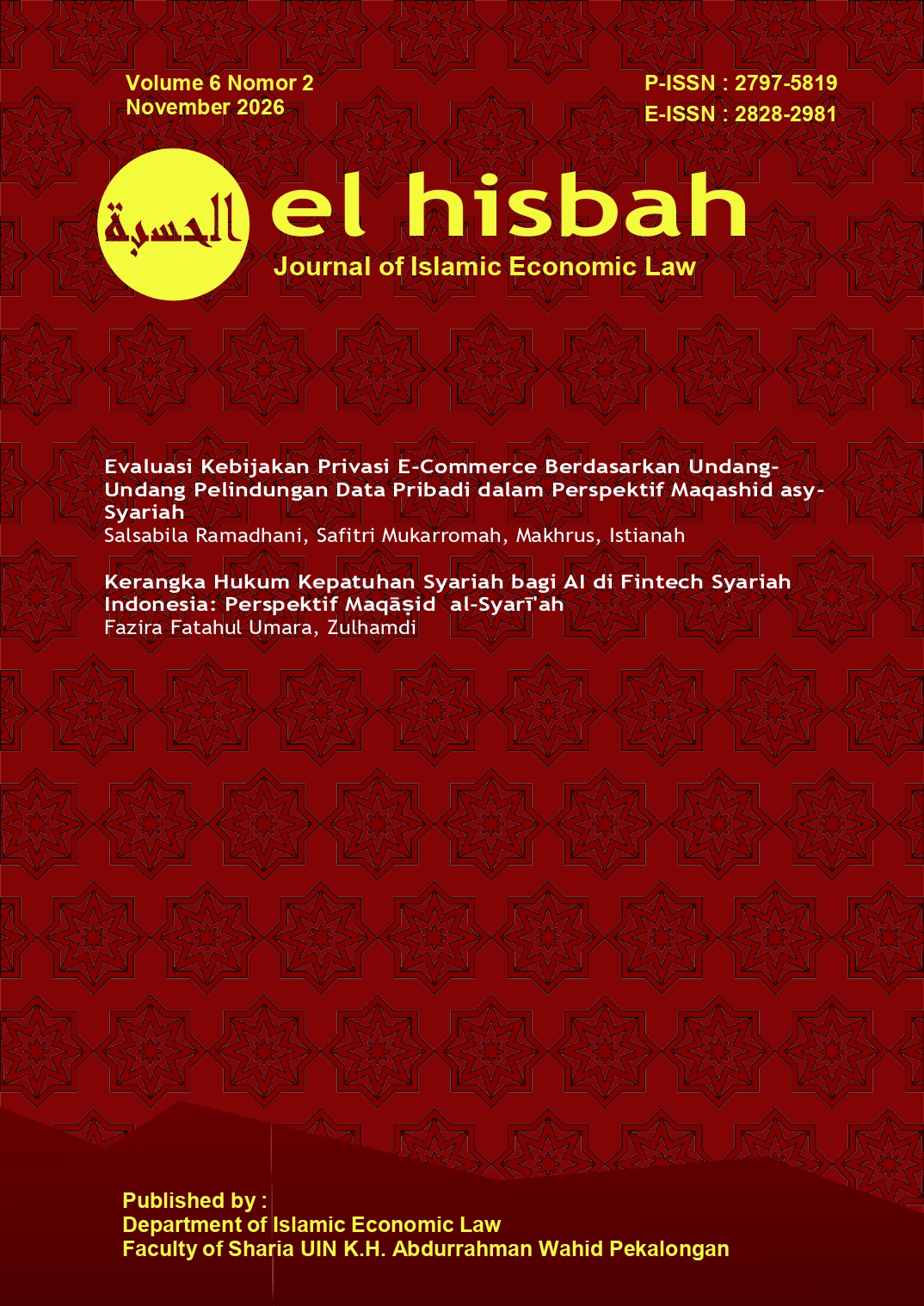
Integrasi Regulasi Zakat Produktif dan Wakaf Tunai bagi Pemberdayaan Perempuan Kepala Keluarga: Tinjauan Maqāṣid al-Sharīʿah
DOI:
https://doi.org/10.28918/elhisbah.v6i2.16303Abstract
This study aims to analyze the regulatory framework governing productive zakat and cash waqf, examine the integration of these two instruments in supporting the economic empowerment of women heads of households (PEKKA), and analyze them from the perspective of maqasid al-sharia. This research employs normative legal research using statutory and conceptual approaches, supported by legal harmonization analysis. The primary legal materials include Law Number 23 of 2011, Government Regulation Number 14 of 2014, Minister of Religious Affairs Regulation Number 16 of 2025, BAZNAS Regulation Number 1 of 2023, Law Number 41 of 2004, Government Regulation Number 42 of 2006 as amended by Government Regulation Number 25 of 2018, and BWI Regulation Number 1 of 2020. The findings indicate that zakat and waqf regulations do not explicitly provide affirmative policies for women heads of households or establish an integrated normative framework for economic empowerment. The integration of these instruments can be developed through coordinated planning, assistance, and program evaluation without merging fund management and while maintaining compliance with their respective sharia requirements. This study recommends strengthening affirmative policies and harmonizing regulations based on the principles of maqasid al-sharia to expand economic access and enhance the economic independence of women heads of households.
Keywords:
References
Aripuspita, L. A. E., Wirantari, I. D. A. P., & Supriliyani, N. W. (2025). Strategi Dinas Sosial Dalam Penanganan Perempuan Rawan Sosial Ekonomi Di Kota Denpasar. Socio-Political Communication and Policy, 2(4), 1–18. https://doi.org/10.61292/shkr.274
Azzahra, S. N., Jannah, M., Adelia, Y., Oktaviani, I., Pratiwi, W., Fatihah, Azkia, Q. K., & Agustina, M. (2024). Konsep Program Kewirausahaan dan Pemberdayaan Ekonomi Berbasis Wakaf Uang. Journal Of Economis and Business, 2(2), 209–216. https://doi.org/10.61994/econis.v2i2.496
Badan Pusat Statistik. (2024). Persentase Penduduk Miskin Maret 2024 turun menjadi 9,03 persen. https://www.bps.go.id/id/pressrelease/2024/07/01/2370/persentase-penduduk-miskin-
BAZNAS. (2025). Laporan Zakat dan Pengentasan Kemiskinan Nasional 2024. BAZNAS.
Ediz, M. H. (2023). Zakat Dalam Pusaran Ortodoksi Fiqh. Jurnal Al-Ahkam, XXV(2), 144–162. https://doi.org/10.15548/alahkam.v15i2.7534
Fadlah, N. A. L., Aripudin, A., & Dewi, R. (2023). Pemberdayaan Kelompok Perempuan Kepala Keluarga. Tamkin: Jurnal Pengembangan Masyarakat Islam, 8(3), 281–300. https://doi.org/10.15575/tamkin.v8i3.28290
Fausi, A., & Mubarok, J. (2023). Fikih Pemimpin dan Pernikahan Beda Agama: Kontekstualisasi Kaidah Taṣarruf al-Imām ‘alā alRa’iyyah Manūṭun bi al-Maṣlaḥah. Komparatif; Perbandingan Hukum Dan Pemikiran Islam, 3(2), 113–131. https://doi.org/10.15642/komparatif.v3i2.2003
Fauzi, N. A. (2024). Wakaf Produktif Untuk Pemberdayaan Ekonomi Keluarga Perspektif Undang-Undang Nomor 41 Tahun 2004 Tentang Wakaf. Sakina: Journal of Family Studies, 8(1), 1–14. https://doi.org/10.18860/jfs.v8i1.3742
Ghafur, F., Mukhammad, B., Manik, Y. K. A., Arifyanto, G. T., Hasibuan, D. K. S., & Hutagalung, S. A. (2026). Maqāṣid al-Sharīʿah-Based Optimization of Cash Waqf : A Governance Analysis of Structural Constraints and Productive Economic Empowerment Strategies in Indonesia. Jurnal IPTEK Bagi Masyarakat, 5(3), 678–687. https://doi.org/10.55537/j-ibm.v5i3.1640
Hafizd, J. Z. (2021). Kedudukan wakaf dalam ekonomi dan strategi pengembangannya. Mahkamah: Jurnal Kajian Hukum Islam, 6(1), 108–118. https://doi.org/10.24235/mahkamah.v6i1.7854.g3653
Hasniati, & Saadah, C. (2026). Stock Zakat in Indonesia : A Maqāṣ id al- Sharī ‘ ah Analysis of Non-Halal Income. El Hisbah : Journal of Islamic Economic Law, 6(1), 17–30. https://doi.org/10.28918/elhisbah.v6i1.14979
Islam, M. R. I. (2024). Pembagian Maqashid al-Syari’ah berdasarkan pengaruhnya terhadap umat manusia (Dharuriyyat, Hajiyyat dan Tahsiniyat). Celestial Law Journal, 2(1), 93–105. https://journal.unsuri.ac.id/index.php/clj/article/view/523
Kahfi, A., & Zen, M. (2024). Sinergi Zakat dan Wakaf dalam Mewujudkan Kesejahteraan Ekonomi Syariah Kontemporer: Analisis Fiqh Muamalah. AL-AFKAR: Journal for Islamic Studies, 7(4), 631–649. https://doi.org/10.31943/afkarjournal.v7i4.1676
Lestari, B. Y., Ardila, F. N., Akbar, M. S., & Subhan, R. (2024). Analisis Dampak Program Pemberdayaan Bunda Mandiri Sejahtera ( BISA ) Dalam Meningkatkan Kesejahteraan Ekonomi Masyarakat. Jurnal Ekonomi Syariah Pelita Bangsa, 09(01), 175–182. https://doi.org/10.37366/jespb.v9i01.1316
Lestari, I. P., Pambekti, G. T., & Annisa, A. A. (2023). Cash Waqf Behavior: Explaining Financial Consciousness and The Moderating Role of Religiosity. Muslim Business and Economic Review, 2(1), 49–78. https://doi.org/10.56529/mber.v2i1.155
Muhammad Fathrul Quddus, Manoarfa, H., & Suci Aprilliani Utami. (2022). Masalah dan Solusi Penghimpunan Wakaf Tunai di Indonesia: Pendekatan Analytical Hierarchy Process. Jurnal Ekonomi Syariah Teori Dan Terapan, 9(5), 710–730. https://doi.org/10.20473/vol9iss20225pp710-730
Musdawati, M. (2024). Perempuan Kepala Keluarga, Kemiskinan dan Pemberdayaan di Aceh. Takammul : Jurnal Studi Gender Dan Islam Serta Perlindungan Anak, 13(1), 45–54. https://doi.org/10.22373/takamul.v13i1.25945
Ngarifah, N., Chamid, A., & Lagos, E. H. O. (2026). Regulasi Ziswaf dalam Kerangka Hukum Positif Indonesia : Perspektif Maqashid Al- Shari ’ ah. El Hisbah : Journal of Islamic Economic Law, 6(1), 49–70. https://doi.org/10.28918/elhisbah.v6i1.14841
Peraturan Badan Amil Zakat Nasional Nomor 1 Tahun 2023 Tentang Pelaporan Pelaksanaan Pengelolaan Zakat, Infak, Sedekah, Dan Dana Sosial Keagamaan Lainnya, 1 (2023). https://peraturan.go.id/id/peraturan-baznas-no-1-tahun-2023
Peraturan BWI No. 1 (2020).
PMA No. 16 Tahun 2025 Tentang Pedayagunaan Zakat Untuk Usaha Produkti, Pasal 4–5, 1 (2025).
PP No. 14 Tahun 2014 Tentang Pelaksanaan Undang-Undang Nomor 23 Tahun 2011 Tentang Pengelolaan Zakat (2014).
PP No. 25 Tentang Perubahan Pemerimtah Nomor 42 Tahun 2006 (2018).
PP No. 42 Tentang Pelaksanaan Undang-Undang Nomor 41 Tahun 2004 Tentang Wakaf (2006).
Priatna, U. H., Said, S., & Atiah, I. N. (2024). Efektivitas Pendayagunaan Zakat Produktif Laz Harfa Dalam Pemberdayaan Kelompok Usaha Mikro Berbasis Perempuan Di kota Serang Pada Masa Endemi Covid-19. Jurnal Masharif Al-Syariah: Jurnal Ekonomi Dan Perbankan Syariah, 9(2), 1240–1258. https://doi.org/10.30651/jms.v9i2.22628
Pusat Kajian Strategis BAZNAS. (2024). Advanced Study: 37 Trillion Priority Target List of Potential Zakat On Balance Sheet 2025. 16 Desember 2024. https://puskasbaznas.com/publications/officialnews/1973-advanced-study-37-trillion-priority-target-list-of-potential-zakat-on-balance-sheet-2025
Umar, M., MayaPutra, Soemitra, A., & Shabri, M. (2025). Pemberdayaan Ekonomi Perempuan Melalui Kewirausahaan : Tinjauan Sistematis atas Hambatan Struktural, Kendala Partisipastif, dan Dukungan Sosial. Jurnal Ilmiah Manajemen Dan Akuntansi Medan, 7(2), 2797–6238. https://doi.org/10.47709/jumansi.v7i2.6292
UU No. 23 Tahun 2011 Tentang Pengelolaan Zakat, Pasal 3 Huruf B (2011).
UU No. 41 Tentang Wakaf (2004).
Yulfa, R., Puspitawati, H., & Mukflikhati, I. (2022). Tekanan Ekonomi, Coping Ekonomi, Dukungan SosialDan Kesejahteraan Perempuan Kepala Keluarga. Jur. Ilm. Kel. & Kons, 15(1), 14–26. https://doi.org/10.24156/jikk.2022.15.1.14
Zaenal, M. H., & Dkk. (2023). Potensi Peningkatan Kesejahteraan Mustahik Melalui Skema Istitsmar Dana Zakat. Pusat Kajian Strategis BAZNAS.
Downloads
Published
License
Copyright (c) 2026 Firyal Dara Azkia, Yoesrizal Muhammad Yoesoef

This work is licensed under a Creative Commons Attribution-NonCommercial 4.0 International License.
 Journal El Hisbah : Journal of Islamic Economic Law by Faculty of Sharia, UIN K.H. Abdurrahman Wahid Pekalongan, Central Java, Indonesia is licensed under a Creative Commons Attribution 4.0 International License.
You are free to:
- Share ” copy and redistribute the material in any medium or format
- Adapt ” remix, transform, and build upon the material for any purpose, even commercially.
Under the following terms:
-
Attribution ” You must give appropriate credit, provide a link to the license, and indicate if changes were made. You may do so in any reasonable manner, but not in any way that suggests the licensor endorses you or your use.
- No additional restrictions ” You may not apply legal terms or technological measures that legally restrict others from doing anything the license permits.