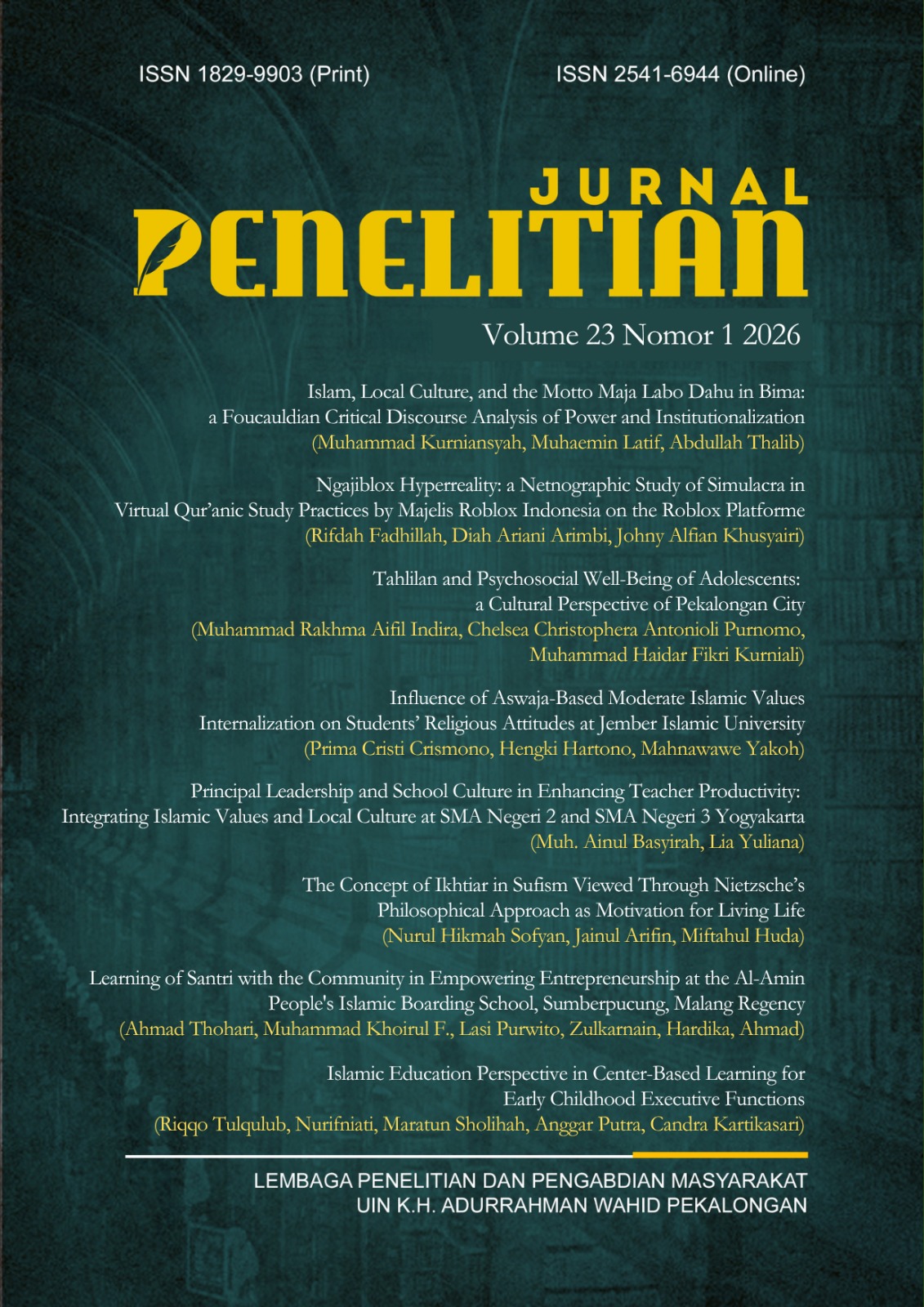
Tahlilan and Psychosocial Well-Being of Adolescents
a Cultural Perspective of Pekalongan City
DOI:
https://doi.org/10.28918/g10bb733Abstract
Adolescent delinquency in Indonesia increasingly appears in concrete forms such as inter-student violence, substance abuse, risky sexual behavior, and peer-group conflicts, reflecting identity confusion, emotional instability, and weakened social attachment. In Pekalongan, these conditions are intensified by digital overexposure, academic competition, economic uncertainty, and tensions between traditional values and modern youth culture. This study aims to explore tahlilan as a reflective–cultural strategy to support adolescent psychosocial well-being. Using a qualitative approach, data were collected through semi-structured interviews with adolescents, cultural figures, and community members, supported by literature and document analysis. Data were analyzed thematically through an iterative process of open coding, categorization, and theme construction to interpret patterns of emotional regulation, identity negotiation, and religious coping. Data validity was ensured through source and method triangulation. The findings indicate that tahlilan can be optimized through four interrelated components: guided self-reflection, prayer and gratitude journaling, safe community spaces, and digital engagement via the hashtag #TahlilanUntukJiwa. These components function as mechanisms for emotional containment, identity consolidation, psychological resilience, and religious character formation through collective spiritual experiences. The study concludes that revitalizing culturally embedded spiritual practices, when integrated with reflective and digital strategies, can serve as a preventive and promotive approach to adolescent mental health challenges.
Keywords:
References
Azhar1, J. K., Hikmah, S. A. D., Abimayu, R., & Santoso4, M. B. (2021). Pembentukan identitas diri remaja pecandu hisap lem. https://doi.org/10.24198/jppm.v2i3.37831
Bandung, I. T. (2023). Kuliah tamu ``Membangung Karakter Komunitas’’ sebagai bekal mahasiswa sebelum pengabdian masyarakat.
Bishop, J. B., Giles, D. E., & Bryant, R. H. (2005). Teachers’ perspectives on educator mental health competencies: A qualitative case study. American Journal of Qualitative Research, 1(1), 1–15. https://doi.org/10.29333/ajqr/5792
Budiman, I., & Isnaeni, A. (2025). Tahlilan sebagai kegiatan doa bersama: Pengaruhnya terhadap kehidupan spiritual dalam masyarakat. Jurnal Agama Dan Masyarakat, 15(1), 92–105. https://doi.org/10.31219/osf.io/wpuey
Bulan, N., Zahra, D., & Nisa’, S. (2022). Pengaruh lingkungan sosial terhadap perkembangan mental remaja. TAUJIHAT: Jurnal Ilmiah Pendidikan Dan Sosial, 3(2), 101–115. https://doi.org/10.21093/tj.v3i2.6481
Carlson, K. M., & González-Prendes, A. A. (2016). Cognitive Behavioral Therapy With Religious and Spiritual Clients: A Critical Perspective. Journal of Spirituality in Mental Health, 18(3), 253–281. https://doi.org/10.1080/19349637.2016.1159940
Dein, S. (2018). Against the Stream: religion and mental health - the case for the inclusion of religion and spirituality into psychiatric care. BJPsych Bulletin, 42(3), 127–129. https://doi.org/10.1192/BJB.2017.13
Dursun-Karsli, P., & Alyagut, P. (2022). Meaning in life, psychological hardiness and death anxiety. BMC Psychology, 10(1), 1–10. https://doi.org/10.1007/s12144-021-02695-3
Estriyani, A., Siregar, M. F. Z., & Zein, N. H. (2025). Faktor-faktor Kenakalan Remaja pada Remaja Usia 13–15 Tahun. Journal of Educational Research and Humaniora (JERH), 2(2), 32–40. https://doi.org/10.51178/jerh.v2i2.2034
Fanani, Z., & Sabardila, A. (2001). Sumber Konflik Masyarakat Muslim, Perspektif Keberterimaan Tahlil.
Franklin, C. G. S., Kim, J. S., Ryan, T. N., Kelly, M. S., & Montgomery, K. L. (2012). Teacher involvement in school mental health interventions: A systematic review. Children and Youth Services Review, 34(5), 973–982. https://doi.org/10.1016/j.childyouth.2012.01.027
Jannah, A. I., Khairunnisa, A. S., Vinaya, A., Maya, M., Darpa, M. M., & Afriyahnti, N. A. (2025). Perspektif Generasi-Z terhadap Tahlilan: Antara Budaya dan Syariat di Era Digital. Socius: Jurnal Sosiologi Dan Pendidikan Sosiologi, 5(1), 45–60. https://doi.org/10.5281/zenodo.15294133
Jannah, M., & Satwika, Y. W. (2021). Pengalaman krisis identitas pada remaja yang mendapatkan kekerasan dari orangtuanya. Jurnal Penelitian Psikologi, 8(2), 51–59. https://doi.org/10.26740/cjpp.v8i2.40842
Julaeha, E. (2019). Peran pembimbing konseling Islam dalam menanggulangi konflik psikologis remaja. Prophetic: Professional, Empirical. And Theoretical Research Journal of Counseling, 2(1), 1–10. https://doi.org/10.24235/prophetic.v2i1.4754
Karlina, L. (2020). Fenomena terjadinya kenakalan remaja. Jurnal Edukasi Nonformal, 1(1), 147–158.
Kaur, S., Kaur, K., & Verma, R. (2022). Impact of social media on mental health of adolescents. Journal of Pharmaceutical Negative Results, 13(3), 779–783. https://doi.org/10.47750/pnr.2022.13
Kholilurrohman. (2018). AYO, KITA TAHLIL! MENGUNGKAP DALIL-DALIL SAMPAINYA HADIAH PAHALA AMAL SALEH BAGI MAYYIT. Nurul Hikmah Press.
Mahmud, A. (2024). Krisis identitas di kalangan generasi Z dalam perspektif patologi sosial pada era media sosial. Jurnal Ushuluddin: Media Dialog Pemikiran Islam, 26(2). https://doi.org/10.24252/jumdpi.v26i2.51032
Matun, A., Nadhiroh, N., Anifah, F., Widyanti, A. S., Qoirina, N. R., Noviyanti, S. A., & Windarwati, D. D. (2020). Pendampingan meditasi, dzikir, dan doa pada remaja untuk menjaga kesehatan mental di Poskeskel Jagir Surabaya [Laporan Pengabdian kepada Masyarakat]. Universitas Muhammadiyah Surabaya.
Mustamu, A. C., Hasim, N. H., & Khasanah, F. (2020). Pola Asuh Orang Tua, Motivasi, dan Kedisiplinan dalam Meningkatkan Kesehatan Mental Remaja Papua. Jurnal Sosial Dan Ekonomi, 3(1), 45–56. https://doi.org/10.36085/jkmu.v8i1.640
Mustaqim, A. (2023). Transformasi diri: Membangun keseimbangan mental dan spiritual melalui proses islah. Jurnal Kawakib, 4(2), 120–134. https://doi.org/10.24036/kwkib.v4i2.173
Nurhuda, S. P., & Nasichcah, S. S. A. (2023). Terapi Dzikir Dalam Kesehatan Mental. Jurnal Ilmu Sosial, Humaniora Dan Seni (JISHS), 2. https://doi.org/10.62379/jishs.v2i2.1324
Nurmawati, N., Widodo, S. F., Putri, S. A., Kamila, L. A., & Diena, A. (2025). Faktor Perilaku Krisis Identitas Kalangan Remaja. Community Development Journal: Jurnal Pengabdian Masyarakat, 6(1), 1046–1055. https://doi.org/10.31004/cdj.v6i1.39810
Prihatiningsih, T., & Wijayanti, N. (2019). Pengaruh tingkat pendidikan orang tua terhadap pola asuh anak. Jurnal Pendidikan Anak, 5(2), 123–130. https://doi.org/10.20961/kc.v9i3.50219
Puspita, M. M. A. A. C., & Widjaja, Y. (2023). Tingkat Kemampuan Refleksi Diri Dalam Pembelajaran Mahasiswa Fakultas Kedokteran Universitas Tarumanagara. Al-Iqra Medical Journal: Jurnal Berkala Ilmiah Kedokteran, 6(1), 32–35. https://doi.org/10.26618/aimj.v6i1.9090
Rahmadani, A., & Muktafi, M. (2025). Terapi spiritual sebagai pendekatan holistik untuk mengatasi rasa rendah diri pada remaja. Pustaka: Jurnal Ilmu-Ilmu Budaya, 25(1), 117–121. https://doi.org/10.24843/pjiib.2025.v25.i01.p16
Romadon, S., Santoso, B., & Wijayanti, I. (2023). Stigmatisasi Tradisi Tahlilan Sebagai Ritual Yang Mengada Ada: Kajian Teori Stigma Erving Goffman. Akrab Juara: Jurnal Ilmu-Ilmu Sosial, 8. https://doi.org/10.58487/akrabjuara.v8i2.2101
Schwartz, S. J., Zamboanga, B. L., Meca, A., & Ritchie, R. A. (2012). Identity around the world: An overview. New Directions for Child and Adolescent Development, 2012(138), 1–18. https://doi.org/10.1002/cad.20019
Social, W. A. (2024). Digital 2024: Indonesia. DataReportal.
Subica, A. M., & Yamada, A. M. (2017). Development of a spirituality-infused cognitive behavioral intervention for individuals with serious mental illnesses. Psychiatric Rehabilitation Journal, 40(1), 100–107. https://doi.org/10.1037/PRJ0000102
Survey, I. N. A. M. H. (2022). Report of the Indonesia – National Adolescent Mental Health Survey (I-NAMHS). Center for Indonesian Policy Studies.
Suryana, E., Hasdikurniati, A. I., Harmayanti, A. A., & Harto, K. (2022). Perkembangan remaja awal, menengah dan implikasinya terhadap pendidikan. Jurnal Ilmiah Mandala Education, 8(3), 1917–1928. https://doi.org/10.58258/jime.v8i3.3494
Thomas, J., & Barbato, M. (2020). Positive religious coping and mental health among Christians and Muslims in response to the COVID-19 pandemic. Religions, 11(10), 498. https://doi.org/10.3390/rel11100498
Yulianti, T. S., & Andika, I. P. J. (2024). Analisis kesehatan mental mahasiswa Sekolah Tinggi Ilmu Kesehatan Panti Kosala. KOSALA: Jurnal Ilmu Kesehatan, 12(2), 277–284. https://doi.org/10.37831/kjik.v12i2.368
Zola, E. A. (2023). Tahlilan dalam perspektif (historis, sosiologis, psikologis, antropologis). https://doi.org/10.62748/tarbawi.v11i01.70
Downloads
Published
License
Copyright (c) 2026 Muhammad Rakhma Aifil Indira, Chelsea Christophera Antonioli Purnomo, Muhammad Haidar Fikri Kurniali

This work is licensed under a Creative Commons Attribution 4.0 International License.

This work is licensed under a Creative Commons Attribution 4.0 International License.