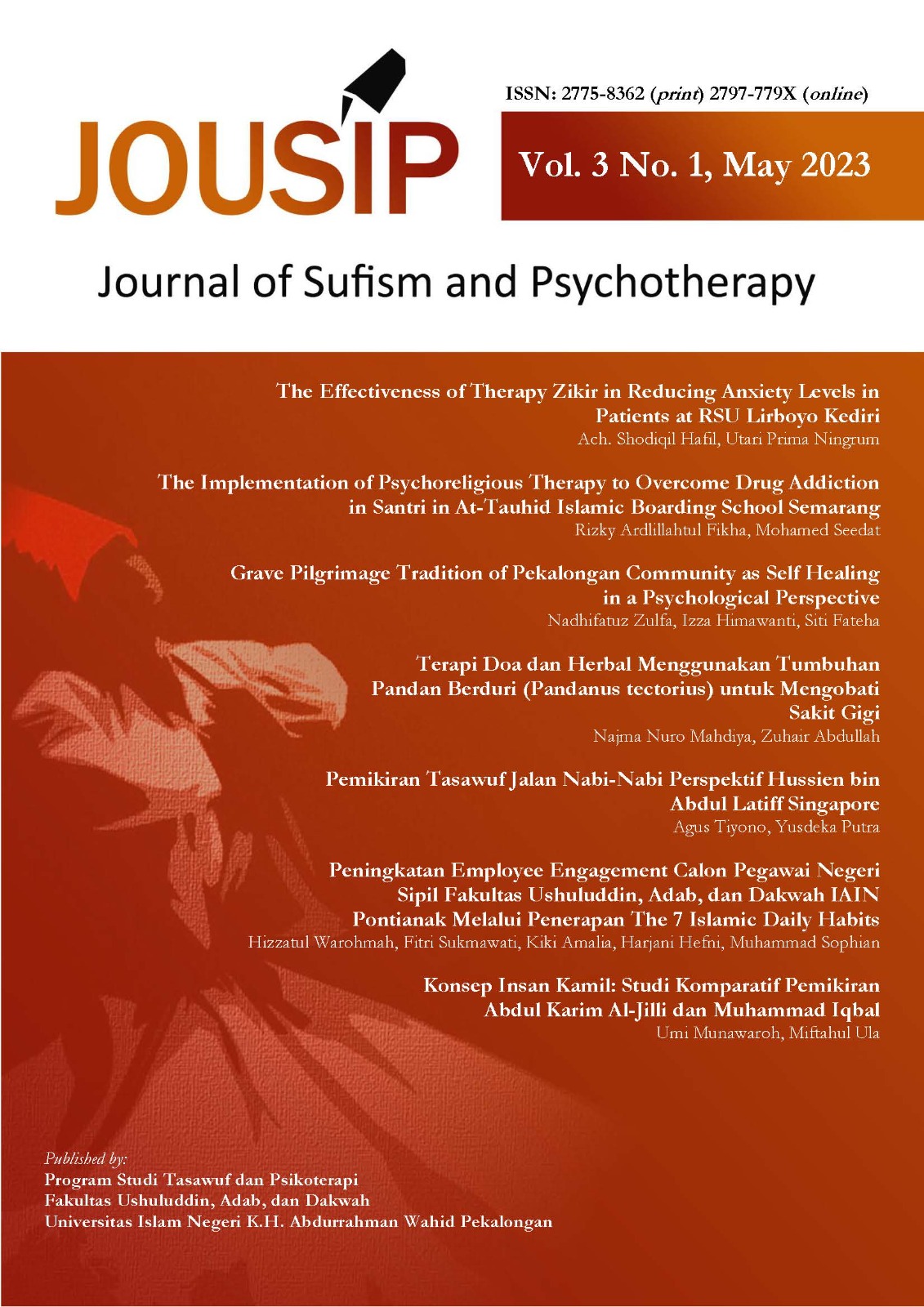
The Effectiveness of Therapy Zikir in Reducing Anxiety Levels in Patients at RSU Lirboyo Kediri
DOI:
https://doi.org/10.28918/jousip.v3i1.859Abstract
People who are sick with certain diagnoses tend to experience anxiety disorders. Anxiety is a psychological problem that has a negative impact on the patient, one of which will affect the healing process. Anxiety cannot be observed and seen directly. Alternative actions that can support the healing process are by providing spiritual treatment. Treatment with spiritual aspects, one of which is the provision of Zikir therapy which has a relaxing effect that can reduce anxiety levels in patients. This study aims to determine the effectiveness of Zikir therapy to reduce anxiety levels in patients at RSU Lirboyo Kediri. This study used the Quasi-Experimental method, with data mining obtained based on filling out questionnaires, as well as interviews with inpatients, and also from observations at Lirboyo General Hospital. The subjects in the study were several hospitalized patients with different levels of anxiety. Measurement of anxiety levels using the Hamilton Anxiety Rating Scale (HARS) anxiety scale. From the results of the study showed, that by doing Zikir therapy for ±10-15 minutes there can be a decrease in anxiety levels in patients. This proves that Zikir therapy can effectively reduce anxiety levels in inpatients at Lirboyo Hospital. Zikir therapy can create a feeling of calm and tranquility in the soul. Zikir therapy is also a therapy for a person's anxiety when he gets problems, feels himself weak, has no support and help in the face of various pressures and dangers in life. This research is expected to be a source of information in order to improve health service efforts by implementing Zikir therapy, especially in patients who experience high levels of anxiety.
Keywords:
References
Anggraieni, W. N., & Subandi, S. (2014). Pengaruh terapi relaksasi zikir untuk menurunkan stres pada penderita hipertensi esensial. JIP (Jurnal Intervensi Psikologi), 6(1), 81-102.
Bulechek, G. M., & McCloskey, J. C. (1992). Defining and validating nursing interventions. Nursing Clinics of North America, 27(2), 289-299.
Cahyono, J. S. B. (2013). Meraih kekuatan penyembuhan diri yang tak terbatas. Gramedia Pustaka Utama.
Chasani, M. T. (2022). The Urgency of Zikir in Modern Life. Formosa Journal of Multidisciplinary Research, 1(8), 1663-1674.
El-Mubarok, M. (2014). Lengkap & Praktik Doa Zikir Harian Khusus Ibu Hamil. Jakarta: Wahyu Qolbu.
Faradisi, F. (2012). Efektivitas terapi murotal dan terapi musik klasik terhadap penurunan tingkat kecemasan pasien pra operasi di pekalongan. Jurnal ilmiah kesehatan, 5(2).
Frager, R. (2014). Psikologi Sufi. Jakarta: Theological Publishing House.
Hannan, M. (2014). Dzikir khafi untuk menurunkan tingkat kecemasan pada lansia. Wiraraja Medika: Jurnal Kesehatan, 4(2), 47-94.
Haryanto, A., & Samsul, M. (2008). Energi Dzikir Menentramkan Jiwa Membangkitkan Optimsme. Amzah, Wonosobo.
Isaacs, A. (2005). Mental Health and Psychiatric Nursing. Dean Praty Rahayuningsih (penerjemah). Jakarta: EGC.
Kaplan, H. I., Sadock, B. J., & Grebb, J. A. (2010). Gangguan Mood dalam Sinopsis Psikiatri. Tangerang: Binarupa Aksara.
Muslih, M., & Subhi, M. R. (2022). Taxonomy Of Spiritual Quotient Learning Outcomes: an Insight From Tasawwuf Perspective. Edukasi Islami: Jurnal Pendidikan Islam, 11(03), 643-660.
Mustofa, A. (2021). Dzikir sebagai Metode Terapi pada Korban Penyalahgunaan Narkotika di Majelis Alif Lam Mim Gejlig Kajen Pekalongan. JOUSIP: Journal of Sufism and Psychotherapy, 1(1), 85-98.
Perdana, M. & Niswah, Z. (2012). “Pengaruh Bimbingan Spiritual Terhadap Tingkat Kecemasan Pada Pasien Pre Operatif Di Ruang Rawat Inap RSUD Kajen Kabupaten Pekalongan.” Jurnal Keperawatan.
Perwataningrum, C. Y., Prabandari, Y. S., & Sulistyarini, R. I. (2016). Pengaruh Terapi Relaksasi Zikir Terhadap Penurunan Tingkat Kecemasan Pada Penderita Dispepsia. JIP (Jurnal Intervensi Psikologi), 8(2), 147-164.
Primadona. (2010). Pengaruh Zikir (Membaca Al-Quran) Terhadap Perubahan Kadar Hormon T4 (Tetraiodototironin) Pada Qori Di Lingkungan IPTIK Jakarta. Jakarta: FKIK UIN.
Purba, D. H., Purba, A. M. V., Saragih, H. S., Megasari, A. L., Argaheni, N. B., Utami, N., & Darmawan, D. (2021). Kesehatan Mental. Yayasan Kita Menulis.
Purwanto, S. (2006). Relaksasi dzikir. Suhuf, XVIII (01), 39–48.
Rajab, K. (2019). The Effect of Zikir Relaxation in Counseling to Reduce Internet Addiction. AL-TA’LIM JOURNAL, 26(1), 1-11.
Ridho, A. Z. A., & Hayati, S. M. (2022). Konsep Zikir Sufistik dalam Tafsir Al-Qur’ān Al-Karīm Karya Mullā Ṣadrā. JOUSIP: Journal of Sufism and Psychotherapy, 2(2), 167-182.
Safari, T. & Saputra, N. E. 2009. Manajemen Emosi. Jakarta: PT Bumi Aksara.
Salim, A. H. A. (2006). Terapi Al-Quran untuk penyakit fisik dan psikis manusia. Jakarta: Asta Buana Sejahtera.
Santoso, M. B. (2016). Kesehatan mental dalam perspektif pekerjaan sosial. Share: Social Work Journal, 6(1).
Shihab, M. Q. (2008). M. Quraish Shihab menjawab 1001 soal keislaman yang patut anda ketahui. Lentera Hati.
Syukur, A. 2012. Sufi Healing Terapi Dengan Metode Tasawuf. Jakarta: Erlangga.
Tahir, M. & Angreani, M. (2017). “Pengaruh Zikir Terhadap Kecemasan Pada Pasien Pre Operasi.” Ilmiah Kesehatan Pencerah. 6(1):33–39.
Downloads
Published
Article Statistics
Issue
Section
License
Copyright (c) 2023 Ach. Shodiqil Hafil, Utari Prima Ningrum

This work is licensed under a Creative Commons Attribution-ShareAlike 4.0 International License.